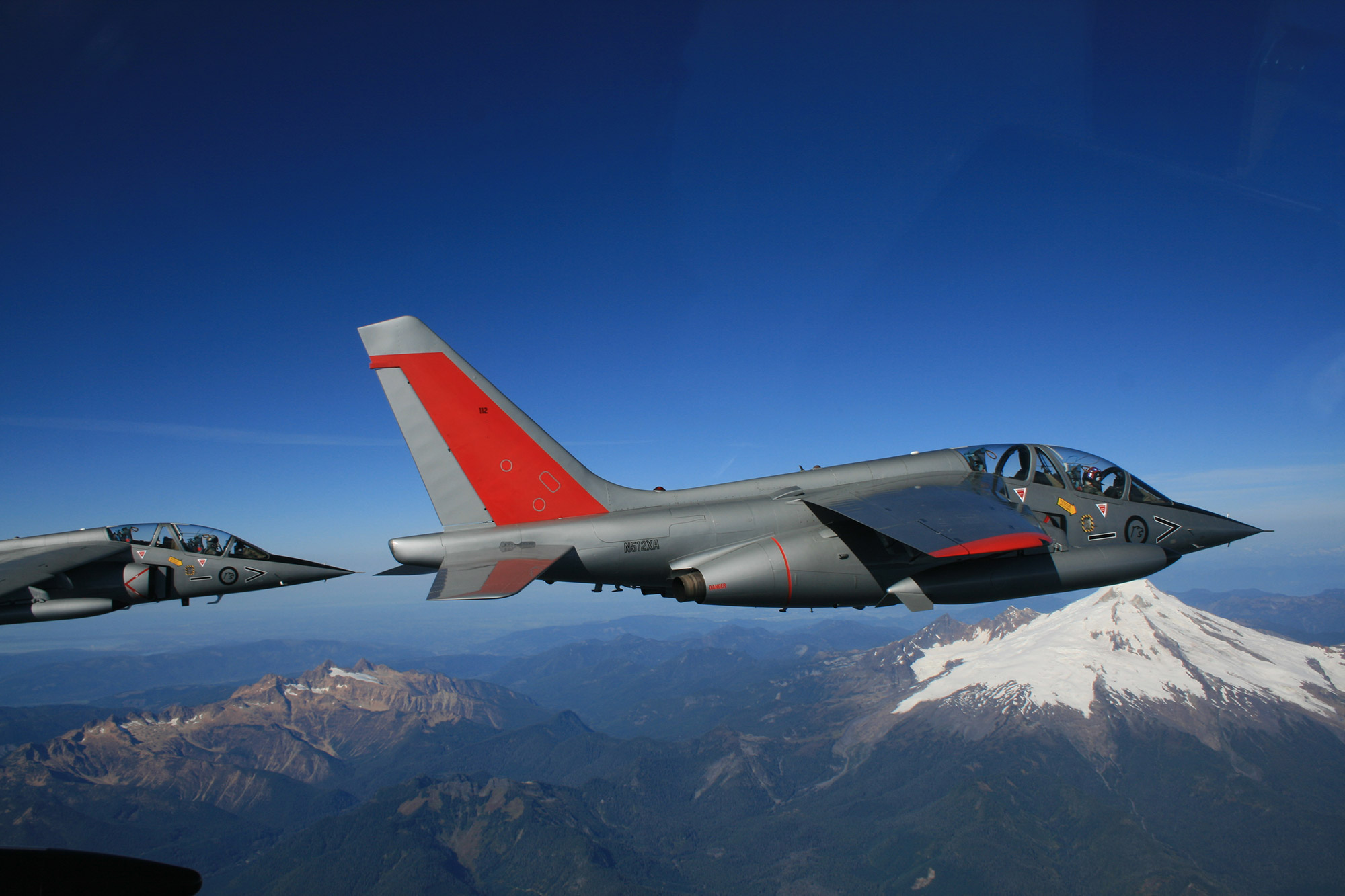
L-39 Transition
The L-39 transition course prepares a student for a checkride to earn an experimental aircraft authorization and act as PIC of the Albatros. Ground instruction includes aircraft history, systems, normal and emergency procedures and performance, boldface memory items, a review of jet warbird accidents and their causes, aeronautical decision making and regulations pertaining to jet warbirds. The flight portion of the course includes stalls, steep turns, basic aerobatics, unusual attitude recoveries, normal and crosswind landings, overhead approaches, cross country planning, simulated flame outs, high altitude operations, emergency procedures and instrument approaches and holding patterns if the student desires IFR privileges in the jet.
After completion of this course the student can take their checkride to earn their L-39 experimental aircraft authorization with an examiner in our jet. |
Jet Familiarization
The jet familiarization course allows students with no prior jet warbird time to experience flight in a military jet. The course consists of one flight of approximately 40 minutes, which serves as the first flight in the L-39 transition course, and approximately two hours of ground instruction. The ground portion includes a discussion of the history of the L-39, a cockpit orientation, emergency egress procedures, the training required to act as PIC of a jet warbird and an overview of jet warbird regulation in the United States. During the flight students will experience stalls, steep turns, aerobatics and an overhead break to a landing.
Note: Students in this course must have at least a US Private Pilot certificate with a single engine-land rating. |
Jet Unusual Attitudes
The jet unusual attitude course prepares pilots of jet aircraft for emergency situations they may encounter that can not properly be replicated in a simulator or piston aircraft. Simulators can not properly reproduce the G forces or disorientation experienced in an aircraft. Piston aircraft can not sustain G forces for as long as jet aircraft during recoveries and do not offer performance or feedback in flight comparable to jets. Unusual attitude training in jets solves all of these issues.
The L-39 provides an ideal platform for this training thanks to its simple, robust systems, design load limit of eight Gs and high VNE speed. During the course stalls in all attitudes along with nose low, nose high and spiral unusual attitude recoveries are explored with emphasis on achieving and maintaining corner velocity under G loading. This course consists of two flights.
|